Natural Relief for Rheumatoid Arthritis: What the Science Says About This Ancient Amazonian Balm
Discover the science behind Amazonian Wild Balm — a traditional Peruvian herbal formula with ingredients backed by peer-reviewed research. Learn what studies say about arnica, eucalyptus, boa fat, suri oil and molle for joint and muscle relief.
Chakana Healing Space
6/1/20267 min read
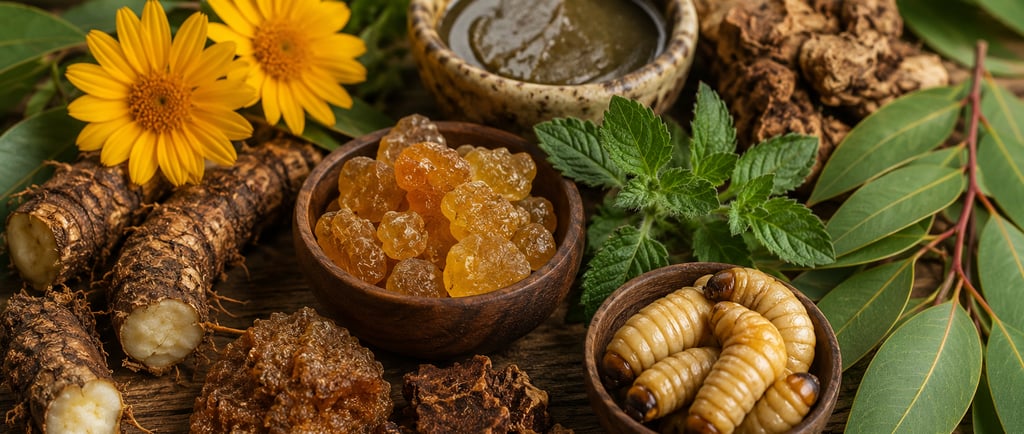
Natural Relief for Rheumatoid Arthritis: What the Science Says About This Ancient Amazonian Balm
Peruvian healers have used these ingredients for centuries. Modern research is now catching up with what they already knew.
If you are living with rheumatoid arthritis, you have probably tried everything your doctor recommended. And if you are reading this, you are likely looking for something more. Something that does not come with a long list of side effects. Something rooted in nature rather than a pharmaceutical lab.
You are not alone. According to Medical News Today, over 1.3 million adults in the United States live with rheumatoid arthritis, and a significant number of them actively seek complementary and alternative approaches to manage their symptoms alongside conventional treatment.
Deep in the Peruvian Amazon, communities have been combining specific animal fats, plant resins, and botanical oils for generations to address exactly the kind of chronic joint pain, inflammation, and stiffness that defines life with RA. These formulas were not created randomly. They were refined over centuries of observation, passed from healer to healer, tested on real bodies in real conditions.
Amazonian Wild Balm from Chakana Healing Space is built on that tradition. But what makes it different from simply claiming "ancient wisdom" is that modern science has now begun to validate several of its key ingredients through peer-reviewed research. Here is what the studies actually say.
Important: This article is for informational purposes only and does not constitute medical advice. Amazonian Wild Balm is a traditional herbal formula and is not intended to diagnose, treat, cure, or prevent any disease. Always consult your doctor before adding any new topical or supplement product to your health routine, especially if you are taking prescription medication for RA.
1. Arnica: The Most Clinically Studied Ingredient in the Formula
If there is one ingredient in Amazonian Wild Balm that the western medical world recognizes without hesitation, it is arnica. And for good reason.
A comprehensive review published by the National Institutes of Health (NIH) examined over 42 clinical studies on arnica products for pain management across multiple conditions including arthritis, post-surgical pain, low back pain, and musculoskeletal injuries. The conclusion: arnica extract applied topically shows promising effects for pain relief, with demonstrated anti-inflammatory, antioxidant, and antimicrobial properties.
Read the full NIH review: Clinical Trials, Potential Mechanisms, and Adverse Effects of Arnica as an Adjunct Medication for Pain Management
Notably, the German Commission E, one of the most respected herbal medicine regulatory bodies in the world, has officially approved arnica flower products for the treatment of rheumatic joint and muscle pain, hematomas, contusions, and edema. That is a regulatory endorsement based on reviewed scientific evidence, not tradition alone.
A separate multicenter clinical trial specifically examined arnica gel in osteoarthritis of the knee, finding positive outcomes with topical application. For people with RA-related joint inflammation, this is particularly relevant.
The active compounds in arnica, particularly helenalin and other sesquiterpene lactones, have been shown to inhibit NF-kappaB, a key molecular switch that drives chronic inflammatory processes. In simple terms: arnica works on one of the same inflammation pathways that RA medications target, but through a natural botanical mechanism.
2. Eucalyptus Oil: Clinically Tested for Rheumatoid Arthritis Pain
Eucalyptus oil is not just a pleasant scent. It is one of the most researched essential oils for pain management, with specific clinical trials focused on rheumatoid arthritis patients.
A randomized clinical trial published in a peer-reviewed journal studied 70 patients with confirmed rheumatoid arthritis over the course of one month. Patients in the eucalyptus group showed a statistically significant reduction in pain severity compared to the control group, with measurable improvements recorded in the third and fourth week of the study.
Read the full study: The effect of eucalyptus inhalation on pain and the quality of life in rheumatoid arthritis (PubMed / NIH)
A separate pharmacological review published in a pain research journal confirmed that the analgesic and anti-inflammatory effects of eucalyptus essential oil are driven primarily by its 1,8-cineole content. This compound inhibits the production of pro-inflammatory cytokines, which are the signaling molecules responsible for the chronic joint inflammation that characterizes RA.
Read the pharmacological review: The Efficacy of Eucalyptus globulus Essential Oil in the Management of Pain
When applied topically, eucalyptus oil also acts as a natural vasodilator, improving local blood flow to affected joints and helping remove inflammatory waste products from tissue. For people with RA who experience chronic joint stiffness and reduced circulation in affected areas, this mechanism is particularly relevant.
3. Molle (Schinus molle): The Peruvian Pepper Tree Used Against Arthritis for Centuries
Molle, known botanically as Schinus molle and commonly called the Peruvian pepper tree, is native to South America and has been a staple of traditional Andean medicine for centuries. For RA sufferers specifically, the research on this plant is particularly promising.
A study published in the Journal of Medicinal Plants Research assessed the anti-inflammatory properties of Schinus molle seed extracts using a standardized model of inflammation. The result was striking: the extract showed dose-dependent inhibition of inflammation comparable to indomethacin, a standard pharmaceutical anti-inflammatory drug widely used in arthritis treatment. The researchers attributed this effect to the plant's polyphenolic content.
A separate study published in the journal Antioxidants in 2021 examined the chemical, antioxidant, and anti-inflammatory properties of Schinus molle in detail, confirming its capacity to suppress inflammatory pathways at a cellular level.
Read the Antioxidants study: Analysis of the Chemical, Antioxidant, and Anti-Inflammatory Properties of Pink Pepper (Schinus molle L.) - NIH / PubMed
Traditional Andean healers have applied Schinus molle topically for arthritis and rheumatism for generations. Modern pharmacology is now providing the molecular explanation for why those applications produced results.
4. Suri Oil: The Amazon's Most Misunderstood Anti-Inflammatory
This is the ingredient that surprises most western consumers. Suri oil is extracted from the larva of Rhynchophorus palmarum, the Amazonian palm weevil known locally as suri. To people outside the Amazon, this sounds unusual. To indigenous communities across Peru, it is a generations-old medicinal and nutritional staple.
Ethnobiological research published in Ethnobiology Letters conducted interviews across six indigenous communities in the Peruvian Amazon, involving three different ethnic groups. More than half of all participants reported using suri larva for medicinal purposes, with the oil documented as a treatment for more than ten different conditions.
Read the ethnobiological study: Rhynchophorus palmarum used in Traditional Medicine in the Peruvian Amazon - Ethnobiology Letters
A pharmacological study published in PubMed analyzed the chemical composition and biological properties of suri oil in detail. The oil was found to contain a high proportion of oleic acid, the same primary fatty acid found in olive oil, which is well-documented for its anti-inflammatory and skin-penetrating properties. The study confirmed direct antioxidant activity and demonstrated the oil's potential to support tissue healing, with no toxic effects found in either in vitro or in vivo models.
Read the PubMed pharmacological study: Rhynchophorus palmarum: Guarani-Kaiowa indigenous knowledge and pharmacological activities - NIH / PubMed
In a topical balm formula, the high oleic acid content of suri oil acts as a deep-penetrating carrier, helping other active botanical compounds absorb more effectively into inflamed joint tissue.
5. Boa Fat and Snake Fat: Directly Validated for Topical Anti-Inflammatory Use in Peru
The term "snake oil" has carried a negative reputation in western culture for over a century, used as shorthand for fraudulent medicine. The irony is that real animal-derived oils, used correctly and sourced authentically, have measurable biological activity that has now been confirmed in peer-reviewed journals.
A study published in the Journal of Ethnopharmacology examined the anti-inflammatory activity of animal oils used in the Peruvian Amazon, specifically including fat from Boa constrictor. The oils were purchased from a traditional market in Iquitos, Peru, and tested using a standardized inflammation model. The result was direct: topical application of all animal oils tested showed measurable anti-inflammatory activity. The researchers concluded that the study provides scientific support for the traditional use of Amazonian animal oils as anti-inflammatory agents.
Read the Journal of Ethnopharmacology study: Anti-inflammatory activity of animal oils from the Peruvian Amazon - ScienceDirect
A separate study focused specifically on Boa constrictor fat examined its physicochemical, antimicrobial, and anti-inflammatory properties. The fat had long been used in traditional medicine for the treatment of burns and inflammatory conditions. The study was designed explicitly to validate that traditional use, and its findings supported it.
Read the Boa constrictor fat study: Physicochemical, antimicrobial and anti-inflammatory evaluation of fixed oil from Boa constrictor - PubMed
Research on snake-derived oils more broadly has confirmed that their omega-3 fatty acid profiles can reduce inflammation and relieve joint stiffness when applied topically. For people managing RA, omega-3 fatty acids are already well-established as one of the most researched natural approaches to reducing inflammatory symptoms.
How to Use Amazonian Wild Balm for Joint and Muscle Relief
Apply a small amount of balm to the affected area and massage gently until absorbed. Use as needed. Traditional applications include:
Swollen or stiff joints, including knees, wrists, and fingers
Muscle pain, cramps, and tension
Neck, spine, and shoulder discomfort
Bruises, bumps, and minor injuries
Areas of chronic inflammation related to rheumatism or arthritis
For external use only. Avoid contact with eyes and mucous membranes. Do not apply to broken skin. Keep out of reach of children. Discontinue use if irritation occurs.
Where This Fits in a Natural Approach to Rheumatoid Arthritis
Natural remedies for RA are most effective when used as part of a broader approach that includes appropriate medical supervision, anti-inflammatory diet, movement, and stress management. Amazonian Wild Balm is not a replacement for your prescribed medication. It is a topical complement rooted in a tradition that modern science is beginning to validate.
What sets it apart from most "natural" products is the specificity of its ingredients. Each component in the formula has either direct scientific study or strong ethnopharmacological documentation supporting its traditional use for pain and inflammation. This is not a generic herbal blend. It is a formula developed in a specific place, by people with specific knowledge, over a very long time.
If you have been looking for a topical option that goes beyond common arnica gels and menthol creams, this is a genuinely different product. Unusual ingredients. Real research. A tradition that deserves more attention than it has received.
Amazonian Wild Balm is available at Chakana Healing Space. Made in Peru with wild harvested Amazonian ingredients. 95g per jar.
Medical Disclaimer
This article is for informational and educational purposes only. It does not constitute medical advice and is not a substitute for professional medical consultation, diagnosis, or treatment. The studies referenced are provided for transparency and do not imply that Amazonian Wild Balm has been clinically tested or approved to treat rheumatoid arthritis or any other medical condition. Always consult your healthcare provider before making changes to your treatment plan.