Guarana vs Coffee: Stable Energy, No Crash or Jitters
Guarana vs coffee - which gives better energy? Discover how guarana delivers smoother, longer-lasting focus without the crash or jitters. Learn how to use it, dose it, and combine it with maca or cacao for balanced, natural energy.
Chakana Healing Space
3/25/20268 min read
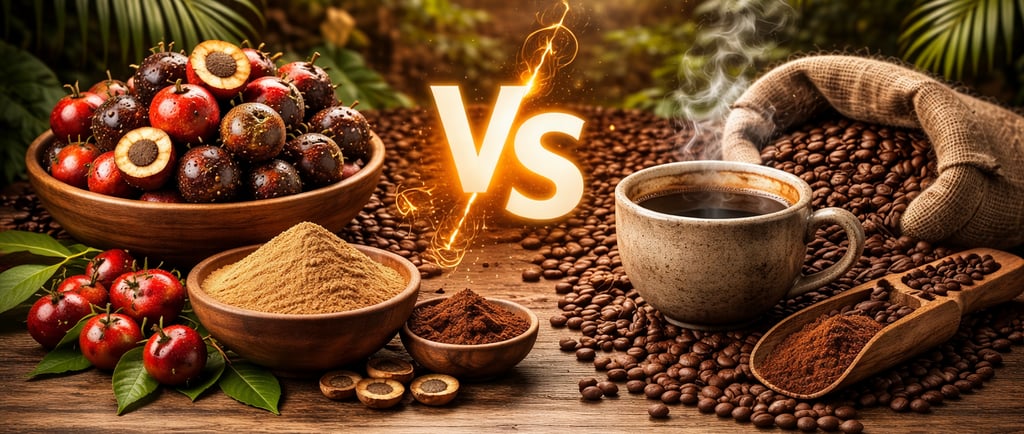
Guarana (Paullinia cupana) is an Amazonian superfood known for caffeine-rich seeds and long-standing traditional use. Indigenous tribes of the Amazon (like the Sateré-Mawé) have brewed guarana for centuries to sustain energy during long hunts and to ease fatigue. In fact, guarana seeds contain about 5–6% caffeine by weight – roughly 4–6 times more than coffee beans. This high caffeine content makes guarana a potent natural stimulant, yet its effects differ from coffee thanks to other plant compounds.
Key Points: Guarana provides sustained stimulation with fewer side effects than coffee, thanks to its natural tannins and flavonoids. These compounds buffer and slow caffeine absorption, so energy comes on gradually. In contrast, coffee delivers caffeine almost immediately (a “quick surge” in alertness) often followed by a crash. As one review notes, “Caffeine is rapidly absorbed, delivering a quick surge … followed by an energy crash,” whereas guarana’s additional compounds (tannins, saponins, flavonoids) slow that release “potentially providing a more sustained stimulant effect”. This slower-release profile may also reduce jitters, anxiety or rebound fatigue that some people experience with coffee.
Guarana naturally contains caffeine plus other alkaloids (theophylline, theobromine) and antioxidant polyphenols (catechins, proanthocyanidins). These additional bioactives may synergize to improve mood and focus beyond caffeine alone. For example, a trial found that guarana improved reaction time and alertness under stress better than pure caffeine. Many users report sharper mental focus and less nervous energy from guarana, likely due to these combined effects.
Caffeine Content & Slow Release
Both guarana and coffee contain caffeine (an adenosine-receptor antagonist that blocks sleepiness). However, there are key differences:
Caffeine Level: Pure guarana seeds can be ~5% caffeine, whereas coffee beans (dry weight) average around 1–2%. (Espresso grounds are often ~0.2% by weight after brewing.) In practical terms, a small amount of guarana powder can deliver as much caffeine as a coffee cup.
Slow-release due to tannins: Guarana’s caffeine is bound in plant fibers with tannins and saponins. These compounds delay caffeine’s release into your bloodstream. As noted above, guarana’s “additional bioactive compounds slow the release of caffeine and modulate its pharmacokinetics”. The result is a gentler ramp-up of energy: you feel alertness come on more steadily, not in a sudden spike.
Longer duration: With guarana, caffeine levels often peak about an hour after consumption, and its effects can last several hours. In contrast, coffee’s caffeine hits faster and can leave you tired sooner. One analysis suggests guarana has a “slower onset of action and a longer duration of action” compared to coffee.
Tip: If you’re sensitive to caffeine’s jitters or crash, try substituting guarana for one of your daily coffees. A typical approach is to start with ½ to 1 teaspoon of guarana powder (about 500–1000 mg) mixed into a drink, rather than a mug of coffee. This often yields alertness without the spike–crash pattern.
Effects on the Nervous System
Caffeine’s main effect is stimulating the central nervous system (CNS). By blocking adenosine, it increases neurotransmitters (dopamine, norepinephrine, etc.) that boost alertness. Both coffee and guarana do this, but guarana’s unique profile can change the experience:
Smooth alertness: As mentioned, guarana delivers caffeine more gradually. Consumers often find they feel more steady concentration with guarana and fewer side effects. The same review that noted slow-release also observed that the slower caffeine delivery of guarana may “reduce the risk of shakiness, jitteriness, or rebound fatigue” compared to caffeine alone.
Added bioactive support: Besides caffeine, guarana provides theobromine (also in cacao) and theophylline, which have mild CNS effects, plus antioxidants. Some of these (like catechins and procyanidins) may further support brain health. One study’s conclusion was that guarana’s extra compounds might be behind cognitive boosts beyond what caffeine alone gives.
Heart and stress response: Any caffeine—including guarana’s—can raise heart rate and adrenaline in sensitive folks. Research shows caffeine activates the stress axis, increasing cortisol and epinephrine (adrenaline). In large amounts, this can cause feelings of anxiousness or a racing heart (“coffee jitters”). However, because guarana’s caffeine is released slowly, it may lessen that adrenal spike for some people. (Note: We should still drink guarana in moderation—up to 400 mg caffeine per day is generally considered safe for most adults.)
If you’re concerned about adrenal fatigue or chronic stress, guarana is sometimes preferred by wellness practitioners as a gentler option. (Keep in mind that “adrenal fatigue” is a non-medical term for chronic stress; talk to a doctor if you have severe fatigue.) In any case, swapping one coffee for a guarana-based drink can soften the stress response. And pairing guarana with adaptogens like maca or calming cacao (see below) is a popular strategy to balance out stimulation.
Focus, Fatigue & Cognitive Effects
Both caffeine and guarana can sharpen focus. Caffeine is well-known to reduce perceived fatigue and improve alertness, vigilance, and reaction time. Guarana, thanks to its caffeine and other compounds, can similarly enhance cognitive performance:
Reaction time & attention: In controlled trials, guarana supplementation improved reaction speed and alertness more than a placebo. In that study, cyclists who took guarana (at a dose matching 5 mg/kg caffeine) were faster on reaction tests before and after exercise, and reported higher alertness, whereas an equivalent dose of pure caffeine did not have the same effect.
Memory & mood: Anecdotally, many users find guarana boosts short-term memory and lifts mood (likely via neurotransmitter effects). One lab review noted that guarana is often reported to improve cognitive tasks, though scientific results are mixed. Still, some trials link guarana to better memory and mood at lower doses than caffeine.
Reduced fatigue: Because guarana provides energy steadily, people often feel sustained stamina without crashing. (It’s even been used in cancer-related fatigue studies, although evidence is still emerging.) The combination of caffeine plus antioxidants in guarana may fight mental fatigue more gently than coffee alone.
Overall, emerging research suggests guarana can maintain focus and energy without over-stimulating the brain. For example, a recent meta-analysis found guarana had a small but consistent effect on speeding up response times in cognitive tests. People often describe guarana as giving them a clearer head – likely because the sustained caffeine keeps them alert while preventing the “crash” that distracts after coffee.
Practical Use: Dosing, Timing, and Combinations
Dosage: A common starting dose is around 500–1000 mg of guarana powder (roughly ½–1 teaspoon), taken once or twice a day. This delivers roughly 40–80 mg of caffeine (depending on the seed’s caffeine content). Users often adjust based on tolerance: if you’re very caffeine-sensitive, start with less. Never exceed about 3000 mg (3 g) of powder in one day. (By comparison, 3 grams of guarana at 5% caffeine is 150 mg caffeine – well within the safe daily limit for most adults.)
Form: Guarana comes as powder or capsules. Powder is easy to mix into smoothies or teas. Capsules (standardized for caffeine content) give precise dosing. Whichever form, be mindful of total caffeine: if you drink coffee or tea too, adjust your guarana accordingly.
Timing: For steady energy, take guarana in the morning or before tasks requiring focus. Unlike coffee, it’s often taken with or after breakfast in a smoothie. Some people enjoy guarana hot tea: steep ½ tsp of powder in warm water or milk as you would matcha (some websites call this “guarana tea”). Because of its high caffeine, avoid taking guarana late in the day.
Replacing coffee: If you want to cut down on coffee jitters, try replacing one coffee with guarana. For example, swap your morning espresso shot for a glass of guarana-infused tonic or cacao drink. Give your body a week or two to adjust and notice differences in energy levels or crashiness.
Combining with maca and cacao: A popular energy blend is guarana + maca + raw cacao. Each brings unique benefits:
Maca (Peruvian root): An adaptogen traditionally used for stamina and mood. Some studies suggest maca may help improve energy and enhance mood. Including maca powder (1–2 g per day) can support endurance and help balance hormones, making caffeine feel more sustained.
Cacao (raw chocolate): Provides theobromine, a mild stimulant that boosts mood and alertness. Theobromine acts similarly to caffeine but is gentler and longer-lasting. Research notes that in cocoa, “theobromine, which is found in higher amounts than caffeine, seems to be behind several effects” on mood and alertness, yet it produces “fewer unwanted effects than caffeine”. Mixing guarana with a bit of cacao powder can smooth out energy and add flavor.
Other adaptogens: Some people add ashwagandha or ginseng for stress resilience, or L-theanine (from green tea) to promote calm focus. These can counteract any overstimulating tendencies.
Usage Tips (bullet list):
Start with a low dose and gradually increase until you find your sweet spot.
Mix guarana powder in smoothies, matcha bowls, or herbal teas – its earthy flavor blends well with chocolate, vanilla, or cinnamon.
Avoid guarana within 6–8 hours of bedtime, as its caffeine is still active for several hours.
If you feel too stimulated, drink water and eat some food – guarana’s tannins may also act a bit like an astringent, so staying hydrated helps.
For more guidance, check our Chakana Guarana product page to see recommended usage and dosage for our wild-harvested Guarana.
Safety & Disclaimer
Guarana is generally safe for healthy adults when used appropriately. Its caffeine is the same molecule found in coffee, so follow general caffeine guidelines: up to about 400 mg of caffeine per day is considered moderate and unlikely to cause harm. (That’s roughly 2–3 cups of coffee or 5–6 teaspoons of guarana powder total.) Pregnant women, children, and people with caffeine sensitivity or certain medical conditions should consult a doctor before using guarana.
Since guarana contains tannins and caffeine, possible side effects (at high doses) include nervousness, stomach upset, insomnia, or headache. These are usually avoidable by sticking to moderate doses and not combining too many stimulants at once. Importantly, guarana is not a medical treatment. If you have a health condition or take medications, check with a healthcare professional before adding any new supplement.
Disclaimer: The information provided here is for educational purposes. It is not intended as medical advice. Always listen to your body and consult a healthcare provider for personalized guidance. Individual results will vary, and the effects of guarana and other herbs may differ based on your physiology and overall diet.
FAQ
Is guarana just like coffee?
No. Both are stimulants due to caffeine, but guarana delivers caffeine more slowly because of its tannins. This typically means you get longer-lasting alertness without the sudden crash that coffee can cause.Will guarana keep me awake at night?
Possibly, yes. Guarana’s caffeine half-life is similar to coffee (3–5 hours), but because its release is gradual, its stimulating effects can persist longer. It’s best to avoid guarana late afternoon or evening, especially if you’re caffeine-sensitive.How much guarana should I take?
Many start with 500–1000 mg of guarana powder (about ½–1 teaspoon) once or twice daily. This usually contains 40–80 mg of caffeine. Adjust up or down based on how you feel, but do not exceed about 3 grams total per day without professional guidance.Can I mix guarana with other supplements?
Yes. A common combo is guarana + maca + cacao. Maca is an adaptogenic root (Peruvian plant) that may support stamina and mood, while cacao adds theobromine (a gentle stimulant/mood enhancer). Always introduce one new thing at a time to see how your body reacts.Will guarana make me anxious?
For most people, guarana’s slow-release caffeine is less anxiety-provoking than coffee. However, very high doses or combining guarana with other stimulants (or if you’re naturally anxious) could cause nervousness. Stick to moderate amounts and note any effects.
Conclusion
Guarana offers a uniquely smooth source of energy compared to coffee. Its high caffeine content powers alertness, while natural tannins and flavonoids provide a gentler, longer-lasting lift. Many users find they enjoy sustained focus and vitality without the midday crash or nervous jitters. Combined with adaptogens like maca and mood-boosters like cacao, guarana becomes part of a holistic energy regimen.
Chakana Healing Space’s wild-harvested Guarana is sustainably sourced from the Amazon and crafted to deliver pure, crash-free energy. Consider trying our premium Guarana for your daily boost, and experience steady mental clarity the traditional way. Stay curious, listen to your body, and enjoy the natural vitality that Guarana can offer!