Camu Camu + Iron: Natural Anemia Support?
Discover how Camu Camu’s high vitamin C content may help boost iron absorption and support anemia, along with tips and precautions.
Chakana Healing Space
2/3/20267 min read
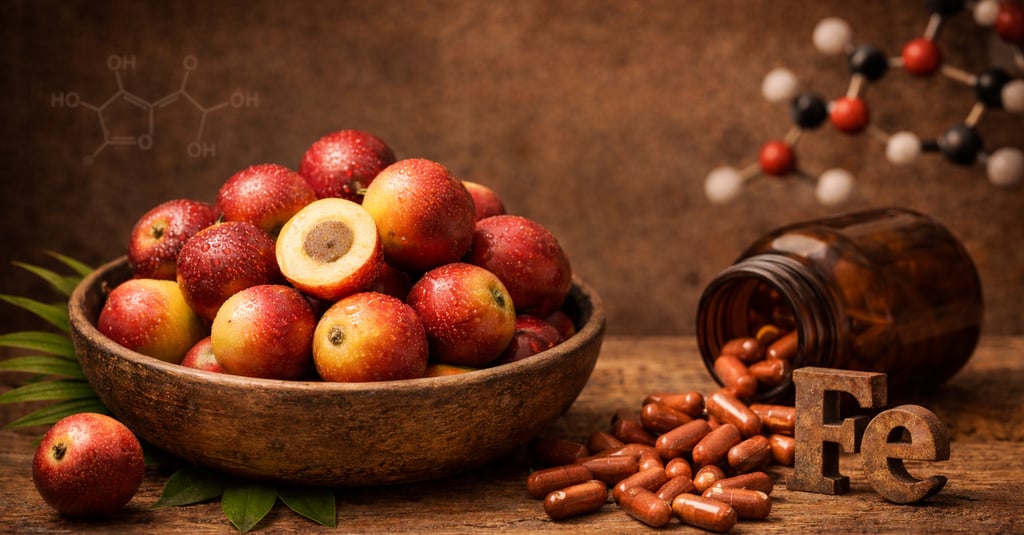
Men with iron deficiency anemia need more than just iron pills; they need help absorbing that iron. Camu Camu, an Amazonian berry bursting with vitamin C, is often touted as a natural way to improve non-heme iron uptake. This article explores the science and tradition behind using Camu Camu alongside iron supplements to fight anemia.
How Vitamin C Helps Iron Absorption
Vitamin C (ascorbic acid) is a well-known enhancer of non-heme iron absorption. Non-heme iron is the form of iron found in plant foods and supplements, which is usually harder for the body to absorb. Vitamin C helps in two key ways:
- Chemical Reduction: It converts ferric iron (Fe³⁺), the common form in meals, into ferrous iron (Fe²⁺), which intestinal cells absorb much more easily.
- Chelation and Solubility: Vitamin C binds to iron in the stomach, keeping it in a soluble complex. This prevents iron from forming insoluble compounds (like iron salts or polyphenol complexes) that the body can’t absorb.
By doing this, vitamin C can overcome many dietary inhibitors. For example, tannins in tea or phytates in grains normally lock up iron, but vitamin C counteracts their effect. In practical terms, eating vitamin C-rich foods (like citrus) with iron-rich meals (like spinach, beans, or iron pills) can significantly increase how much iron your body takes in.
Camu Camu: An Amazonian Vitamin C Superfruit
Camu Camu (Myrciaria dubia) is a small red berry native to the Amazon rainforest of Peru and Brazil. It has earned the nickname “superfruit” due to its exceptional nutrient profile, especially vitamin C. For perspective: just one teaspoon (about 5 grams) of Camu Camu powder can provide around 680–700 mg of vitamin C – 10 times more than an orange by weight. This one teaspoon delivers roughly 760% of the US recommended daily intake for vitamin C.
Other beneficial compounds in Camu Camu include antioxidants like anthocyanins and ellagic acid, which give the berry anti-inflammatory and immune-supporting properties. Indigenous communities have traditionally consumed Camu Camu juice or pulp not only for nutrition but also as a general health tonic. In modern supplement form, Camu Camu powder or capsules are an easy way to tap into its vitamin C power.
Combining Camu Camu with Iron: The Theory
Given its high vitamin C, Camu Camu seems ideal to pair with iron supplements. The basic idea is: take your iron pill alongside Camu Camu (or its juice/powder), so the vitamin C can maximize the iron you absorb. This strategy is commonly recommended in nutrition guides: e.g., taking orange juice with an iron tablet is a classic tip. Camu Camu, being far richer in vitamin C, could theoretically do even better.
However, scientific studies suggest this strategy may have limits. A 2014 lab study using intestinal cell models found that traditional Camu Camu juice actually reduced iron absorption from meals. The researchers gave test meals of rice-lentil and flour porridge mixed with Camu Camu. Instead of helping, Camu Camu’s very high content of polyphenols and tannins bound the iron and overwhelmed the benefit of its vitamin C. In fact, iron uptake dropped significantly as more Camu Camu was added.
This surprising finding suggests that whole Camu Camu fruit or juice may not always enhance iron uptake, because natural compounds in the fruit can inhibit absorption. For someone aiming to boost iron, taking a pure vitamin C source (like a capsule or a glass of juice) could work better than consuming Camu Camu pulp with its fiber and tannins.
What Research Shows: Does Vitamin C Co-Supplementation Help in Practice?
Clinical trials with iron tablets have mixed results on added vitamin C. A 2020 trial of 440 adults with iron-deficiency anemia found no difference in hemoglobin recovery between those taking iron alone and those taking iron + vitamin C. A 2024 meta-analysis of multiple studies saw only a tiny lab improvement (about +0.14 g/dL hemoglobin) when vitamin C was added, far too small to matter clinically. In other words, taking extra vitamin C with an iron pill didn’t significantly speed up anemia recovery in most trials.
Why might this be? One reason is that modern iron supplements often include their own vitamin C or are taken with a meal that has some vitamin C already. Also, if your digestive system and diet allow normal iron absorption, adding more C won’t dramatically change outcomes. The Blood Project summary notes that routine high-dose vitamin C is not necessary for treating iron deficiency anemia with supplements.
That said, caveats exist. If someone’s diet is very low in vitamin C or high in inhibitors (phytates from grains, polyphenols from tea/coffee), then boosting vitamin C can still help. Vegetarians and older adults often benefit from extra vitamin C in their meals. So while Camu Camu might not be a magic fix, combining iron and C still makes nutritional sense and can’t hurt in mild cases.
Recommendations: How to Combine Camu Camu and Iron
If you decide to use Camu Camu in your anemia regimen, here are some practical tips:
Separate timing: To minimize the polyphenol issue, consider taking your iron supplement first thing (on an empty stomach if tolerated), followed by Camu Camu 30–60 minutes later with a meal. This way, stomach acid and the supplement’s formulation handle the iron, then vitamin C in Camu Camu boosts any remaining absorption.
Form of Camu Camu: Pure Camu Camu juice or capsules (which extract out most fiber) might be better than mixing raw pulp. Juice still has tannins, though. Camu Camu powder in capsules or smoothies (as long as it’s well-dissolved) is convenient and allows you to know the vitamin C dose.
Dosage: A common dose is 1 teaspoon (about 5 g) of Camu Camu powder per day, providing ~680 mg vitamin C. Some take up to 1–2 teaspoons. Don’t exceed the amounts on supplement labels. For iron tablets (typically 50–100 mg elemental iron), pairing with 500 mg–1 g of vitamin C is reasonable.
Dietary pairing: Eat Camu Camu (or other vitamin C foods) with iron-rich meals. For example, add Camu Camu powder to breakfast cereal that’s fortified with iron, or blend it into a smoothie with spinach. This mimics the “iron + vitamin C” meal strategy in nutrition.
Hydrate: Vitamin C (especially in fruit form) can cause an osmotic effect. Drink plenty of water when taking Camu Camu to reduce any stomach upset.
By using Camu Camu thoughtfully, you leverage nature’s vitamin C. For example: “For a natural boost, try mixing 1 tsp of organic Camu Camu powder into your morning orange juice or water when taking your iron supplement.”
Safety & Precautions
Camu Camu and iron are generally safe, but note these precautions:
Vitamin C tolerance: Camu Camu’s vitamin C is water-soluble and not stored in the body. The upper safe limit for daily vitamin C in adults is ~2,000 mg. A teaspoon of Camu Camu (680 mg) is usually fine, but higher doses could cause diarrhea or cramps. If you experience loose stools, reduce the dose.
Iron overload conditions: If you have hemochromatosis or other iron-storage issues, avoid extra vitamin C since it can increase iron accumulation. Also, Camu Camu’s vitamin C could add to overall absorption and worsen iron overload.
Medication interactions: Vitamin C at high doses can interact with certain medications (like aluminum-containing antacids or some chemotherapy drugs). Iron supplements themselves should be spaced away from calcium or antacids for best absorption. Always discuss supplements with your doctor if you’re on other medications.
Quality of supplement: Use a reputable Camu Camu product. Chakana’s Camu Camu powder is organic, wild-harvested, and lab-tested for purity. Look for labels stating the vitamin C content (e.g. 10% ascorbic acid) to know your dose.
If in doubt, consult a healthcare provider. These suggestions are meant as general guidance, not medical advice.
Camu Camu Products & Further Reading
Chakana Healing Space carries premium Camu Camu supplements made from 100% wild-harvested Amazonian berries. These supplements offer a potent dose of natural vitamin C to complement your anemia regimen. Check out our organic Camu Camu powder and capsules – perfect for adding to smoothies, juices, or even snacks to boost your iron uptake.
For more on managing iron deficiency, see our guide on safe iron supplementation (dosage, timing, and diet tips) on the Chakana blog. Combining smart nutrition with high-quality supplements is key to restoring healthy iron levels.
Conclusion
In summary, Camu Camu can be a valuable ally in anemia, thanks to its extraordinary vitamin C content. Vitamin C is proven to chemically enhance non-heme iron absorption, so pairing Camu Camu with iron supplements or iron-rich foods makes nutritional sense. However, keep in mind the whole picture: Camu Camu also contains compounds that can compete with iron, and clinical studies suggest the extra C often has only a small effect on lab outcomes.
Ultimately, everyone is unique. If you have anemia, consider incorporating Camu Camu as part of a balanced diet – but focus on overall iron intake and health. At Chakana Healing Space, our passion is supporting your well-being with natural Peruvian superfoods. Browse our Camu Camu and iron-support supplements , and sign up for our newsletter to get more science-backed wellness tips. Together, we’ll help you carry the balance back into your health.
FAQ
Q: Does Camu Camu really help absorb iron?
A: In theory, yes—its vitamin C should boost non-heme iron absorption. But studies show whole Camu Camu (with all its polyphenols) may not dramatically increase iron uptake. It can still help if taken properly (e.g., with iron tablets or as juice), but it’s not a guaranteed fix.Q: How much Camu Camu should I take with iron?
A: A common dose is 1 teaspoon (about 5 g) of Camu Camu powder once daily, providing ~680 mg vitamin C. Match this with your iron supplement dose. For example, take 500–1000 mg vitamin C when you take a standard iron pill. Follow product directions and don’t exceed recommended amounts.Q: Can I just take vitamin C tablets instead?
A: Yes, pure vitamin C pills (ascorbic acid) are effective and have no polyphenols to block absorption. Camu Camu powder is mainly useful if you prefer a whole-food supplement. Both can work, though studies show similar modest benefits.Q: When is the best time to take Camu Camu and iron?
A: Ideally, take your iron supplement first (on an empty stomach if possible) and follow with Camu Camu within 30 minutes. Or mix Camu Camu into a morning juice and drink it while taking iron. Avoid calcium or caffeine around the same time, as they can hinder iron absorption.Q: Are there any side effects?
A: High doses of vitamin C (from Camu Camu or any source) can cause mild stomach upset or diarrhea. You usually need to take a lot to have problems. People with iron-overload conditions (e.g., hemochromatosis) should avoid extra vitamin C because it could worsen iron levels. Otherwise, Camu Camu is safe in recommended amounts.
Safety & Disclaimer
This article is for informational purposes only and is not medical advice. Always consult a qualified healthcare provider before starting any new supplement or treatment for anemia. The information above combines traditional knowledge and scientific research, but individual needs vary. Neither Chakana Healing Space nor its content constitutes a medical recommendation.